AI Value Creation Forum
Agenda
- November 17, 2026
- Javits Convention Center, New York City
12:30 – 1:00 PM
Registration and Networking
1:00 – 1:30 PM
Why AI Is Now a CFO-Level Risk—and Why That Matters to ROI
AI has moved from the IT budget line into the financial fabric of the organization. It is touching controls, vendor relationships and decision-making in ways that land squarely on the CFO’s desk — whether they invited it there or not. As companies invest more in AI, understanding and managing those risks isn’t just about protecting the downside. It’s increasingly part of ensuring those investments deliver the value the business expects. This opening session sets the stakes for everything that follows.
- What changes when AI moves from a tool your IT team manages to a risk your entire leadership team owns?
- Where are CFOs most likely to be caught off guard — and what are peers already dealing with?
- What does AI risk actually cost when something goes wrong — and how can those costs undermine expected returns?
- What controls need to be in place for employees to use AI-generated information to make business decisions, execute business processes and communicate internally and externally?

Glenn Hopper
Author, The AI-Ready CFO
Read Glenn's Bio
Glenn Hopper is a finance and technology strategist with over two decades of experience leading transformation at the intersection of corporate finance, data, and AI. He has served as a multi-time CFO and currently leads AI research and solution development for finance and accounting teams. His work focuses on applying automation, analytics, and machine learning to drive better financial performance and smarter decision-making.
Glenn is the author of three books on artificial intelligence in finance (Deep Finance: Corporate Finance in the Information Age, AI Mastery for Finance Professionals, and The AI-Ready CFO), and teaches AI and finance courses through Duke University’s Fuqua School of Business, the Corporate Finance Institute, AICPA, and LinkedIn Learning. He serves on advisory boards for Preql, the Crews School of Accountancy at the University of Memphis, GENCFO USA, and the AI Leaders Council. His insights have been featured in Forbes, Fortune, and The New York Times.
He holds a master’s degree in finance and a graduate certificate in business analytics from Harvard University, and an MBA from Regis University.
1:30 – 2:10 PM
The AI Risk Landscape: What Every CFO Needs to Understand
This session gives finance leaders a clear-eyed view of the specific risks AI introduces into financial operations — from agentic systems operating inside finance workflows to AI-powered fraud that is faster and harder to detect than anything that came before — and the controls needed to stay ahead of them. This isn’t a technology briefing. It’s a financial risk and readiness briefing.
- When an AI system can initiate transactions or approve payments without a human in the loop, what governance and approval controls need to be in place?
- As bad actors use AI to sharpen impersonation and social-engineering tactics aimed at finance teams, what verification controls keep your team confident in what’s real?
- With AI-enabled tools already scattered across the organization, what guardrails ensure financial workflows are limited to the tools vetted to handle them?

Lauren Pearl
Fractional CFO, Northpoint Security & James Equities LLC;
Co-Host, The Growth-Minded CFO Podcast
Read Lauren's Bio
Lauren Pearl is a CFO Advisor & Educator with deep experience in cybersecurity.
A former software engineer, Deloitte strategy consultant and founder-turned-CFO, Lauren helps finance teams bridge the gap between business needs and technical nerd nuance.
A 3x founder and CFO with 10 years of experience working with tech companies, Lauren has deep experience in infosec, deep tech, web3, hardware, telecom, defense tech, and climate & construction tech. She runs a boutique CFO advisory practice supporting startups, fintech brands, investors, and CFO recruiters.
2:10 – 2:50 PM
From Experiment to Enterprise: What Your CIO, CISO and GC Need the CFO to Know
CFOs don’t need to become technology or legal experts. But they do need to understand what their counterparts are seeing as AI moves deeper into the organization. This session will look at the controls, accountability and cross-functional coordination needed to deploy AI successfully as it begins influencing forecasts, pricing, operational decisions, customer interactions and other business-critical activities.
- What are CIOs and CISOs most worried about that hasn’t reached the CFO’s desk yet?
- How do you control which employees can access which tools while protecting company information and intellectual property?
- Where are the contractual and liability gaps in how most organizations are procuring AI-enabled tools?
- What questions should CFOs be asking their technology and legal teams before the next vendor conversation or employee rollout?
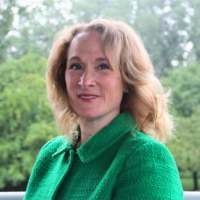
Melissa Flicek
Vice President, Chief Information and Data Officer, Blue Cross and Blue Shield of Minnesota
Read Melissa's Bio
As chief information and data officer at Blue Cross and Blue Shield of Minnesota, Melissa Flicek is accountable for the strategic direction of business technology, cybersecurity, data and analytics, artificial intelligence and facilities. Additionally, Flicek oversees the aligned delivery of technological services and solutions across multiple teams to maximize the reach and impact of data and insights for individual members, group customers and network providers.
Flicek joined Blue Cross in 2024, bringing more than 20 years of experience in leading technology development and business transformation strategies. Flicek comes from United HealthGroup where she served as chief technology officer, consumer experiences for Optum, overseeing product and engineering for enterprise initiatives like identity, marketing technology, mobile, improving the user experience and other digital businesses. She has also held long-term leadership roles at Medtronic, where she had global accountability for digital capabilities, including direct sales tools, digital marketing and establishing an eCommerce and inventory management platform; and at Target Corporation, where she served as a director in Technology Services overseeing cross-channel digital experiences for target.com, mobile apps, social media collaboration and in-store digital.
Flicek is the Vice-Chair for CIO’s Against Cancer and was recognized as a Notable Leader in Health Care by Twin Cities Business magazine in February/March 2026. She also sits on the board of the Minnesota Technology Association.
Flicek obtained her B.A. in English and communications at St. Olaf College in Northfield, Minnesota.

Kelly Slavitt
Chief Legal Officer and Corporate Secretary, Rectangle Health
Read Kelly's Bio
Kelly is a member of the Executive Leadership Team of Rectangle Health, a PE-owned health fintech payment processing company where she provides strategic business and legal advice to enable scalability as its Chief Legal Officer and Corporate Secretary. Previously, she launched both the Corporate Development and Legal Departments at Sikka Software Corporation, a VC-backed healthcare SaaS/software technology B2B Series D startup driven by artificial intelligence (AI), where she enabled a successful exit. Her work as an Advisory Board Director at both AC Health, a healthcare startup, and Parley Pro, a tech startup, helped both companies to their successful exits.
Before she moved to the startup world, Kelly worked in large multi-national corporations and law firms. She was the General Counsel and Corporate Secretary at Reckitt Benckiser LLC, the North American Hygiene and Home business unit of Reckitt Benckiser plc, a FTSE Top 25 company with 40,000 employees based outside of London (LSE: RKT). She and her team of 12 legal professionals protected $3.3 billion in net revenue for RB’s best known brands, including LYSOL, MUCINEX, AIR WICK, DUREX, D-CON, and GLASS PLUS. Prior to Kelly’s 10 years at Reckitt, she was Counsel at General Electric (NYSE: GE) and General Counsel at The American Society for the Prevention of Cruelty to Animals (ASPCA). Prior to moving in-house, she was an IP associate at Skadden Arps and at Thelen Reid in New York City and an IP Solicitor at Allens Arthur Robinson in Melbourne, Australia.
Kelly has a B.A. from The Pennsylvania State University, an M.P.A. from New York University, a J.D. from Brooklyn Law School, an LL.M. from the Benjamin N. Cardozo School of Law, an M.B.A. for Lawyers Certificate from the Questrom School of Business at the Boston University School of Management, and a Corporate Development Certificate from the Kellogg School of Management at Northwestern University. She was identified by Inside Counsel as one of 100 women in the United States ready to be a Fortune 500 General Counsel, and has been featured on podcasts and in publications such as Modern Counsel, Corporate Counsel, Vanguard, and the ABA’s Law Practice Today. Kelly lives in a suburb of New York City with her family. She is an avid cyclist, skier, and salsa dancer.
2:50 – 3:10 PM
Networking Break
3:10 – 4:00 PM
Tabletop Exercise: When an AI Investment Goes Off Track
This is where the afternoon becomes real. Working through an evolving scenario involving a deployed AI finance automation tool, attendees will make the decisions that matter when an AI investment doesn’t go according to plan. The scenario is realistic by design: a vulnerability surfaces, a vendor disclosure raises questions about data use, and the AI tool has already made recommendations that affected financial controls and vendor payments.
- Round 1: What do you know — and what do you need to know immediately?
- Round 2: Who owns the response — CFO, GC, CISO, CIO or audit committee?
- Round 3: What do you disclose, pause or escalate — and in what order?
- Round 4: What should have been in place before this tool was ever deployed?

Khwaja Shaik
Chief Technology Officer, IBM; Member, IBM Academy of Technology and AI Trustworthy Invention Board; Board Director, MOSH
Read Khwaja's Bio
Khwaja Shaik is a board director and IBM CTO recognized for helping CEOs and boards navigate the intersection of technology, governance, and purpose‑led growth. With more than 25 years of leadership experience across IBM, Bank of America, and PwC, he brings deep expertise in digital transformation, AI, cybersecurity resilience, and stakeholder capitalism—areas that sit at the center of modern board oversight.
Khwaja’s board advisory work focuses on translating complex technology challenges into strategic opportunities amid geopolitical uncertainty, cyber threats, and the global energy transition. His leadership has guided organizations through transformative initiatives that delivered measurable business outcomes for both short and long terms, including a 20% earnings surge and a 30% EBITDA increase through innovative operating models and product‑led growth strategies.
Khwaja hosts the monthly LinkedIn Live series “AI and Digital Trust in Advancing Board Excellence,” featuring conversations with global governance and leadership luminaries—including Bill George (Harvard Business School), Doug Conant (former Campbell Soup CEO), Dan Hesse (former Sprint CEO), Jeff Sloan (former Global Payments CEO), Harry Kramer Jr (Former Baxter CEO), Dennis Lockhart (former Atlanta Fed President), and Beverley Sibblies (Board Director, Discover Financial Services).
A prolific voice on board governance and digital trust, Khwaja has authored 150+ articles through his LinkedIn newsletter and delivered keynotes at institutions such as NYU School of Law, NACD, and NASDAQ. CEOs and board directors worldwide seek his counsel on aligning corporate purpose with profitable growth, strengthening enterprise resiliency, and overseeing AI-enabled business transformation.
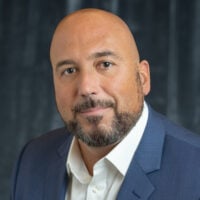
Christopher Hetner
Chief Cyber Advisor, World Wide Technology; Former Senior Cybersecurity Advisor, Chair of U.S. SEC and G-7 Cyber Expert, U.S. Dept of Treasury
Read Christopher's Bio
Chris Hetner is a Senior Executive, Board Director, and leader in Cybersecurity recognized for raising cyber risk and AI governance to the Executive Suite and Corporate Board level to protect industries, infrastructures, and economies. He creates operational resilience by aligning robust Cybersecurity strategies with business objectives. Mr. Hetner’s professional judgment combined with a public company, critical infrastructure (i.e. energy, finance, telecommunications) and SEC regulatory and investor oversight experience has led to his success in corporate and government roles. Currently, he is the Special Advisor for Cyber Risk for the NACD, Chief Cyber Advisor to World Wide Technology, Board of Directors for the NACD CT Chapter, Chair of the Cybersecurity, AI and Privacy Council for the NASDAQ Center for Board Excellence, Senior Advisor Cyber Future Foundation, Board of Directors for Simulint, Research Affiliate with MIT Sloan School of Management, Senior Technology Advisor to the House of Vanderbilt, Fellow Institute for Critical Infrastructure Technology and Executive Member of the Latino Corporate Director Association.
Throughout his career, Mr. Hetner has created and launched Cybersecurity programs in the public and private sectors. As business functions transfer to the cloud, he has consistently elevated the issue of enterprise-wide preparedness and continuity across Boards and Executive Management teams.
He served as the Senior Cybersecurity Advisor to the Chair of the United States Securities and Exchange Commission and as Head of Cybersecurity for the Office of Compliance Inspections and Examination at the SEC. He also represented the Chair of the SEC as a senior member of the US Department of the Treasury Financial Banking Information Infrastructure Committee where he led critical infrastructure resilience across the financial markets, energy, technology and telecommunications sectors. His greatest contributions included vision for and implementation of the first agency wide Cybersecurity governance structure, threat intelligence program, and incident response capabilities. The Cybersecurity resiliency framework he implemented improved the National Examination Program’s ability to monitor and respond to Cyber threats across the US Securities market.
Mr. Hetner has also led efforts across financial, regulatory, critical infrastructure and government agencies to enhance Cybersecurity coordination across global markets. He successfully led diverse teams, in multiple global locations, through transformative thinking about cyber-risk management, Cybersecurity policy, and regulatory compliance to embrace change and become cultures of action and collaboration. He established governance and risk management structures aligned with strategy and business objectives, while integrating resilience into corporate DNA.
He is a Certified Information Security Manager (ISACA), Certified Information Systems Security Professional (ISC2), and holds a high-level USA security clearance. Mr. Hetner earned a MS, cum laude, in Information Assurance from Norwich University and a BS in Security Management from John Jay College of Criminal Justice.
4:00 – 4:30 PM
Building the Foundation to Deploy and Scale Agentic AI
The tabletop exercise surfaces the gaps. This session closes them. Translating the scenario into a practical framework, we’ll examine what organizations need to have in place before deploying agentic AI into critical finance workflows, how to monitor it once it’s operating inside the business, and what accountability, documentation and escalation mechanisms become essential as usage scales.
- What are the non-negotiables before any AI tool touches a mission-critical finance workflow?
- What does effective monitoring look like when AI is not just generating information, but taking action?
- What does an escalation trigger actually look like in practice?
- How do you determine whether an agentic AI deployment is operating as intended, financially and operationally?

Mitchell Troyanovsky
Co-Founder of Basis
Read Mitchell's Bio
Mitchell Troyanovsky is the co-founder of Basis, an agentic AI company recently valued at $1.15 billion and backed by BTV, Khosla Ventures, Accel, and GV. Basis builds AI agents for accountants, including some of the longest-running agents deployed in real financial work today.
4:30 – 5:00 PM
What's Coming Next: The Horizon Every CFO Should See
The way money moves is changing quickly—and AI is accelerating that evolution. Over the next 24 to 36 months, agentic AI and increasingly autonomous payment infrastructure will converge with advances in digital identity, stablecoins and digital currencies, and tokenization to reshape how companies transact and interact with customers. This session will look ahead at what that convergence could mean for the financial ecosystem, how AI will continue to change the fraud and attack landscape, and how finance organizations will need to rethink identity, security and trust as more transactions happen digitally and autonomously.

Michelle Beyo
Author, Mastering the Future of Finance
Read Michelle's Bio
Michelle Beyo is a Global Thought Leader dedicated to driving industry innovation and simplifying the complex world of finance. With over 20 years of expertise in payments, digital identity, and open data, she is the Founder of Finavator, an award-winning consultancy leading cross-industry modernization.
A TEDx speaker and Money20/20 RiseUp Alumni, Michelle is a prominent voice on global stages, moderating high-impact dialogues on agentic payments and fintech’s next act. She is the author of Mastering the Future of Finance (Wiley, Sept 2026) and host of the Step into the Future of Finance podcast, where she decodes trends redefining the industry.
As President of Open Finance Network Canada (OFNC) and a two-time Open Banking Expo Powerlist honoree (2025 & 2026), Michelle advocates for financial inclusion and consumer data rights. Through her Future of Finance Master Class, she mentors the next generation of leaders navigating the evolving open banking landscape.
5:00 PM
Closing Comments
The forum ends where the real work begins. This closing session distills the day into a practical checklist of questions every CFO should be asking — of their technology vendors, their internal teams and themselves — before an AI-enabled tool is funded, procured, deployed or scaled.
- What business outcome are we trying to achieve, and how will we know if the investment is delivering it?
- What data will this tool access — and what will it do with it?
- What happens when it is wrong — and who is responsible?
- What risks stay with the vendor — and what risks transfer to us?
- What do we need in place internally before this tool touches a critical workflow?
- What would cause us to scale, pause or stop the investment?
5:00 – 6:00 PM
Networking Reception
The forum ends where the real work begins. This closing session distills the day into a practical checklist of questions every CFO should be asking — of their technology vendors, their internal teams and themselves — before an AI-enabled tool is funded, procured, deployed or scaled.
- What business outcome are we trying to achieve, and how will we know if the investment is delivering it?
- What data will this tool access — and what will it do with it?
- What happens when it is wrong — and who is responsible?
- What risks stay with the vendor — and what risks transfer to us?
- What do we need in place internally before this tool touches a critical workflow?
- What would cause us to scale, pause or stop the investment?